

Food security
Implementation of the Regional Agricultural Policy: regional stake-holders assess the performance of projects and programmes in 2025 and examine the outlook for 2026
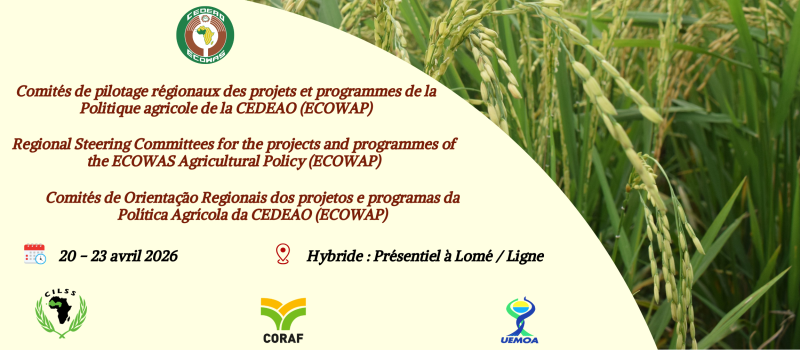
From 20 to 23 April 2026, the city of Lomé (Togo) will host around eighty institution-al stakeholders and technical and financial partners from West Africa’s agrosilvopas-toral and fisheries sectors. This annual meeting forms part of the Regional Steering Committees for the projects and programmes of the ECOWAS Agricultural Policy (ECOWAP). It provides an opportunity for the various stakeholders to assess the per-formance of interventions carried out in 2025 and to identify strategic directions for 2026.
This regional consultation forum provides a key opportunity for accountability, the sharing of experiences and strategic guidance. It enables the ECOWAS Commission, as the regional coor-dinating body, to review progress made, identify obstacles encountered and propose appropri-ate solutions to improve the effectiveness of public and partnership-based action in the agricul-tural sector.
Over three days, representatives from Member States, regional institutions, producer organisa-tions, development partners and sectoral experts will discuss the results achieved in 2025 in relation to the regional initiatives implemented. These discussions will take place against a particularly complex regional backdrop, marked by a resurgence in food insecurity due in part to security crises and the effects of climate change, particularly in the Sahel countries (Burkina Faso, Mali and Niger), and the war in the Middle East.
Against this regional and international backdrop, the Steering Committee (CoPil), the central governing body for regional projects, will analyse the causes and consequences of the security crises in the Sahel that are redefining production zones and trade flows, as well as food sover-eignty policies aimed at reducing dependence on extra-regional markets.
This resilience dynamic is reinforced by close strategic collaboration between ECOWAS and key institutions such as UEMOA, CILSS, CORAF, FAO and the producer organisations benefiting from the various interventions. This inter-institutional synergy aims to ensure technical and institu-tional complementarity, to avoid duplication of effort and ensure optimal use of resources, thereby building a robust decision-making ecosystem focused on overall territorial impact.
Organised around the five thematic areas of ECOWAP, namely (ithe mainng production and productivity, (ii) developing livestock and fisheries resources, (iii) the promotion of value chains, the regional market and the competitiveness of agri-food products, (iv) strengthening resilience, food and nutrition security and sovereignty, and the financing mechanism, (v) gov-ernance and steering of agricultural policy; the 2026 CoPils will review the main achievements of over 20 projects and programmes, as well as the outlook for 2026.
Chaired by Dr Kalilou Sylla, Commissioner for Economic Affairs and Agriculture at the ECOWAS Commission, this technical session aims to ensure the alignment of ongoing interventions, both in the agro-sylvo-pastoral and fisheries sub-sectors, and in terms of cross-cutting themes, measures and other forms of policy incentives related to ECOWAP.
